
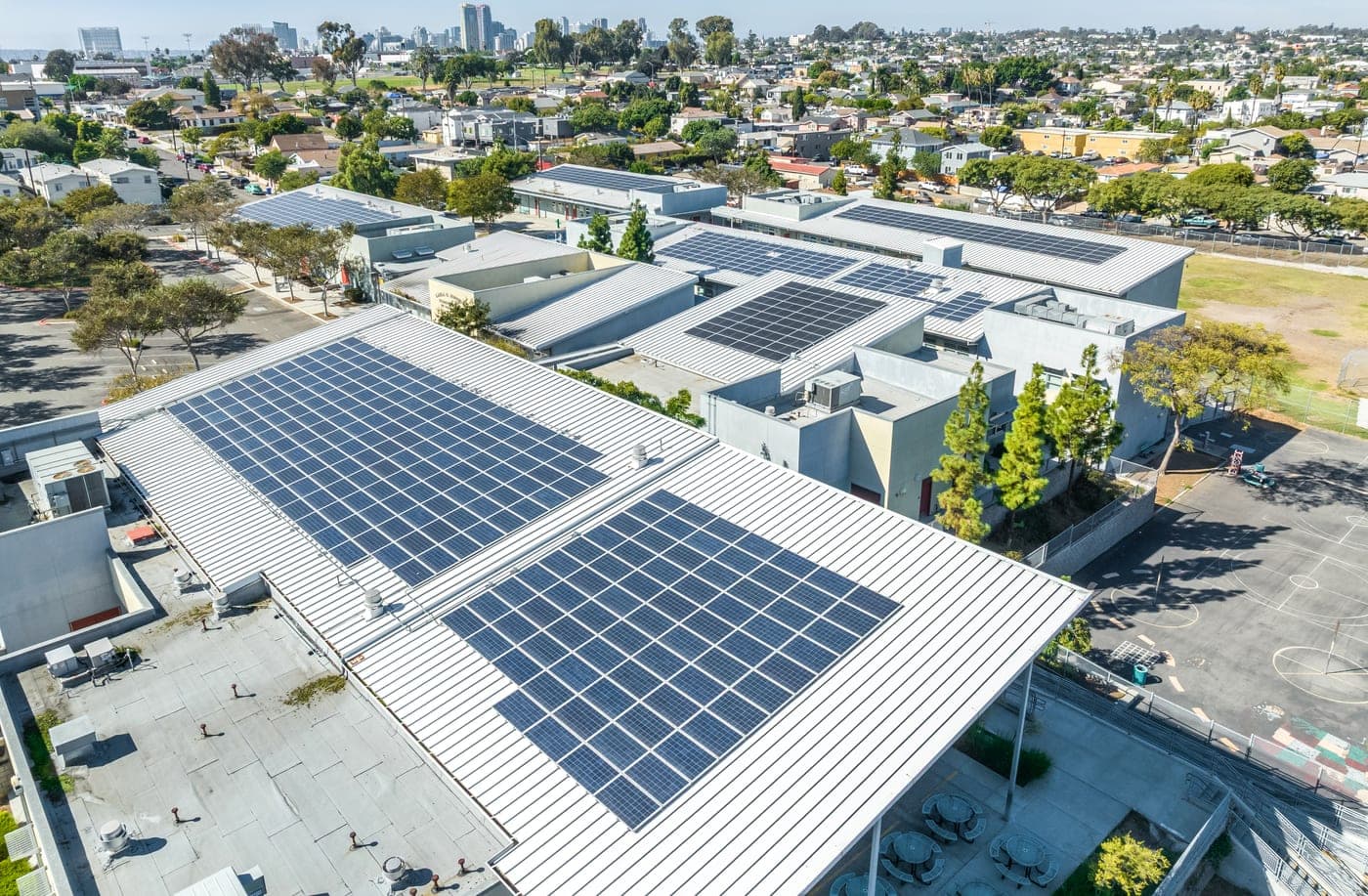
Commercial rooftop solar array on a leased building in San Diego
Industries We Serve

Solar on Commercial Leased Property

Who pays, who benefits, and how the structures differ

Solar on an owner-occupied building is a straightforward calculation. On a leased building it is not, because the party paying for the array and the party paying the electricity bill are often not the same.

That single fact drives everything else — which financing structure fits, who claims the tax credit, and whether the project improves the asset or just the tenant’s operating costs. This page walks through it honestly, including where it does not work. If instead you want to know about leasing the solar system itself, that is covered separately.

01

The Split-Incentive Problem

In most commercial leases the tenant pays the electricity. So if the landlord installs solar, the landlord carries the capital cost and the tenant collects the saving.

That is the central obstacle, and pretending it is not there does nobody any favours. Any credible plan for a leased building has to answer it explicitly.

There are several workable answers — a green lease clause sharing the benefit, a rent adjustment reflecting reduced operating costs, landlord-metered common areas, or a structure where the tenant contracts directly. Which one fits depends on your lease type and how long the current tenancy runs.

02

Where Solar Fits Cleanly

  • Owner-occupied buildings — no split at all, the simplest case by a distance.
  • Triple-net leases where a green clause can be negotiated at renewal.
  • Buildings with substantial landlord-paid common-area load — car parks, lifts, lighting, shared HVAC.
  • Multi-tenant properties where the landlord meters and rebills electricity.
  • Long remaining lease terms, where a shared-benefit arrangement has time to pay back.
  • Owner-occupiers with a tax appetite, who can use the credit directly.

And where it fits poorly: short remaining terms, buildings about to change hands, roofs nearing replacement, or leases that cannot practically be reopened. We would rather tell you that at assessment than after installation.

03

Ownership Versus a Power Purchase Agreement

Ownership

You fund the system, you own the asset, and you claim the Section 48E credit at 30% plus available depreciation. Highest return over the system's life, and it requires capital and tax appetite.

Power Purchase Agreement

A third party owns the array on your roof and sells you the electricity, usually below utility rates. No capital outlay — but the third party owns the system and claims the credit, not you. Returns are lower because someone else is carrying the risk and the financing.

How to choose

It comes down to capital availability, tax position and how long you intend to hold the asset. There is no universally better answer, and any installer who tells you there is one is selling their preferred structure rather than assessing yours.

04

The Federal Credit on Commercial Property

Section 48E provides a 30% credit on qualifying commercial solar. The base rate is 6%, rising to 30% where prevailing-wage and apprenticeship requirements are met.

The exemption matters more than the requirement here: facilities with maximum net output below 1 MW AC are exempt from those labour rules and receive the full 30% automatically. Almost every commercial rooftop in San Diego County sits well below 1 MW.

Two bonus adders can lift it further — an additional 10% where domestic-content thresholds are met, and a further 10% for projects in designated energy communities.

One structural point

Under a PPA the credit belongs to the system owner, not to you. If capturing the credit is central to your case, ownership is the structure that does it. Nothing here is tax advice — model it with your accountant before committing.

05

What Solar Does and Does Not Do to a Building

Solar makes a building's energy costs lower and more predictable, and gives it a credential that some tenants — particularly those with their own reporting obligations — genuinely look for.

You will find plenty of confident figures online about rent premiums and property value uplift from solar. We are not going to repeat them, because they depend heavily on market, asset class and lease structure, and quoting an average as though it were your building's number would be dishonest.

What we can say concretely: reduced and predictable operating costs are real, they are measurable from your own bills, and they are the part of the case you can actually verify before committing.

06

What to Check Before You Commit

  • Remaining roof life — installing over a roof due for replacement means paying to remove and refit the array.
  • Remaining lease term, and when it can next be renegotiated.
  • Who pays the electricity today, and whether that can change.
  • Electrical service capacity and available switchgear space.
  • Structural loading, particularly on older buildings.
  • Your intended hold period for the asset.
  • Any lender or insurer conditions affecting rooftop equipment.

We have installed across institutional and commercial buildings in San Diego County, from a 109.6 kW school array to a 487.7 kW carport structure. Carports are worth raising early on properties with substantial parking — they generate, they shade vehicles, and they carry EV charging without a separate structure.

Questions Property Owners Ask Us

Often you should not, unless the benefit can be shared. The workable routes are a green lease clause at renewal, a rent adjustment reflecting lower operating costs, or focusing on landlord-paid common-area load. If none of those are available, we will say so.

Yes, through a power purchase agreement — a third party funds and owns the array and sells you the electricity. The trade-off is that they claim the tax credit and returns are lower than ownership over the system's life.

Whoever owns the system. Under a PPA that is the third-party owner. If you fund it yourself, it is you. This is usually the deciding factor between the two structures.

Only at 1 MW and above. Below that the facility is exempt from prevailing-wage and apprenticeship requirements and reaches the full 30% automatically, which covers virtually all commercial rooftops here.

Re-roof first. Removing and refitting an array to replace the roof underneath is an avoidable cost, and we will flag it at assessment rather than after installation.

Rooftop work is largely away from occupied space. The disruptive moments are the electrical tie-in and the utility interconnection, both of which are short and schedulable — usually outside business hours.

Solar carports are frequently the better answer on properties with significant parking. They generate, they shade vehicles, and they provide the structure for EV charging without a separate build. Our largest installation to date is a carport array.

Twelve months of bills, the roof, the lease structure and your hold period will tell us most of it. Call 858-281-5110 and we will assess it properly, including telling you if the answer is no.

Have your property assessed before you commit to a structure

We will look at the roof, the service capacity, your lease structure and the building’s actual consumption, then set out which approach fits. Call 858-281-5110 for a free assessment.